


Vis meets AI
This workshop, held in conjunction with IEEE PacificVis 2026, aims to explore this dynamic and rapidly evolving area by fostering communication between the visualization and AI communities. Attendees will engage with the latest research at the intersection of AI-enhanced visualization (AI4VIS) and visualization-enhanced AI (VIS4AI), with a particular focus on how cutting-edge models—such as LLMs, VLMs, and beyond—are reshaping the landscape.
Find out more and submit your work to the Vis meets AI workshop here https://vismeetsai.github.io. All accepted papers will be published in a special issue of the Information Visualization journal.
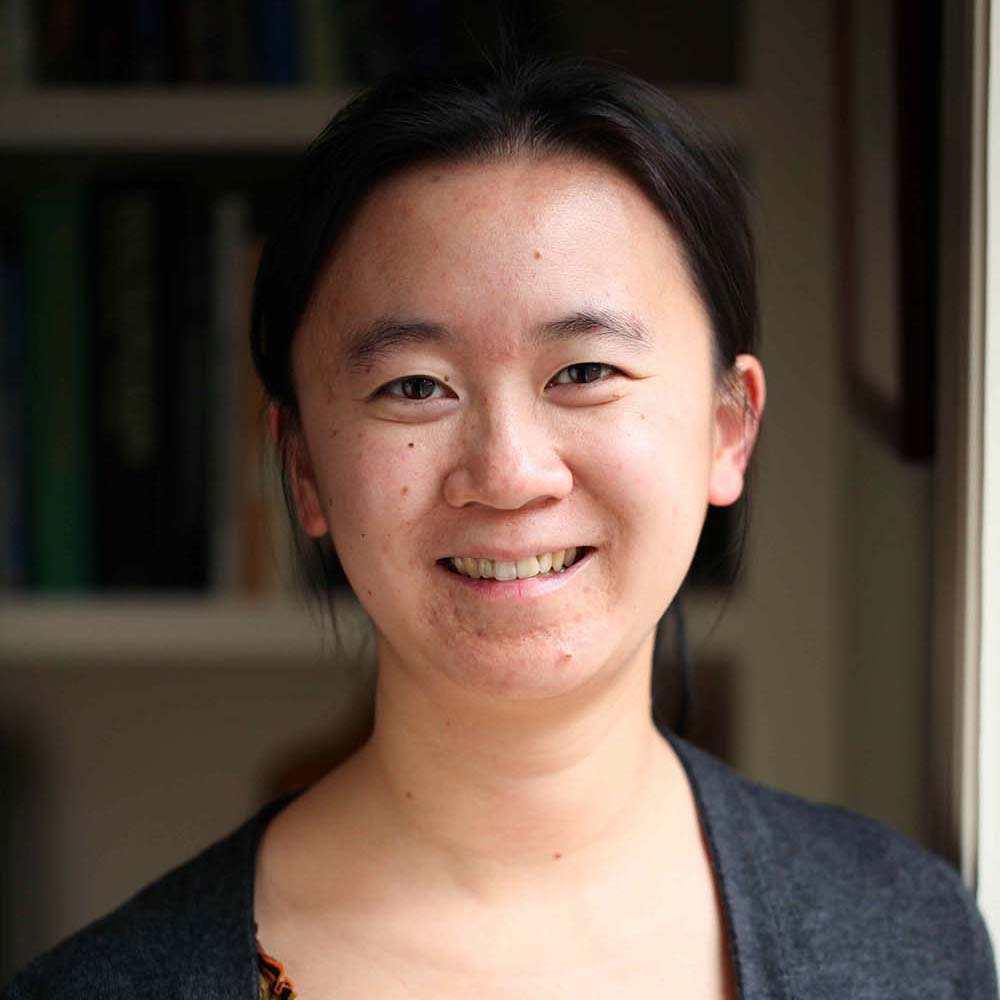
Invited Talk 1: April 20, 11:00 am - 12:00 pm
Title: Topology Meets XAI
Abstract: Deep learning models learn from massive datasets—images, text, and molecular structures—yet the internal organization of their representations remains largely opaque. This talk explores how tools from topological data analysis and visualization, particularly mapper graphs, can illuminate structure within high-dimensional embedding spaces. Mapper graphs expose how clusters of similar representations form, connect, and evolve, much like a map revealing neighborhoods and the roads between them. We present a number of applications at the intersection of topology and explainable AI (XAI) across large language models, image classifiers, and graph neural networks. By leveraging topological structure, we move closer to understanding how deep learning models organize knowledge, transforming opaque black boxes into interpretable, navigable landscapes.
Bio: Dr. Bei Wang Phillips is an Associate Professor in the School of Computing, an Adjunct Associate Professor in the Department of Mathematics, and a faculty member of the Scientific Computing and Imaging (SCI) Institute at the University of Utah. She received her Ph.D. in Computer Science from Duke University. Her research lies at the intersection of topological data analysis, data visualization, and computational topology, with a focus on integrating topological, geometric, statistical, data mining, and machine learning methods with visualization to enable scientific discovery in large and complex datasets. Her work has been supported by multiple awards from the NSF, NIH, and DOE. Dr. Phillips received a DOE Early Career Research Program award in 2020, an NSF CAREER award in 2022, and the Presidential Early Career Award for Scientists and Engineers (PECASE) from President Biden in 2024, the highest honor bestowed by the U.S. government on early-career scientists and engineers.
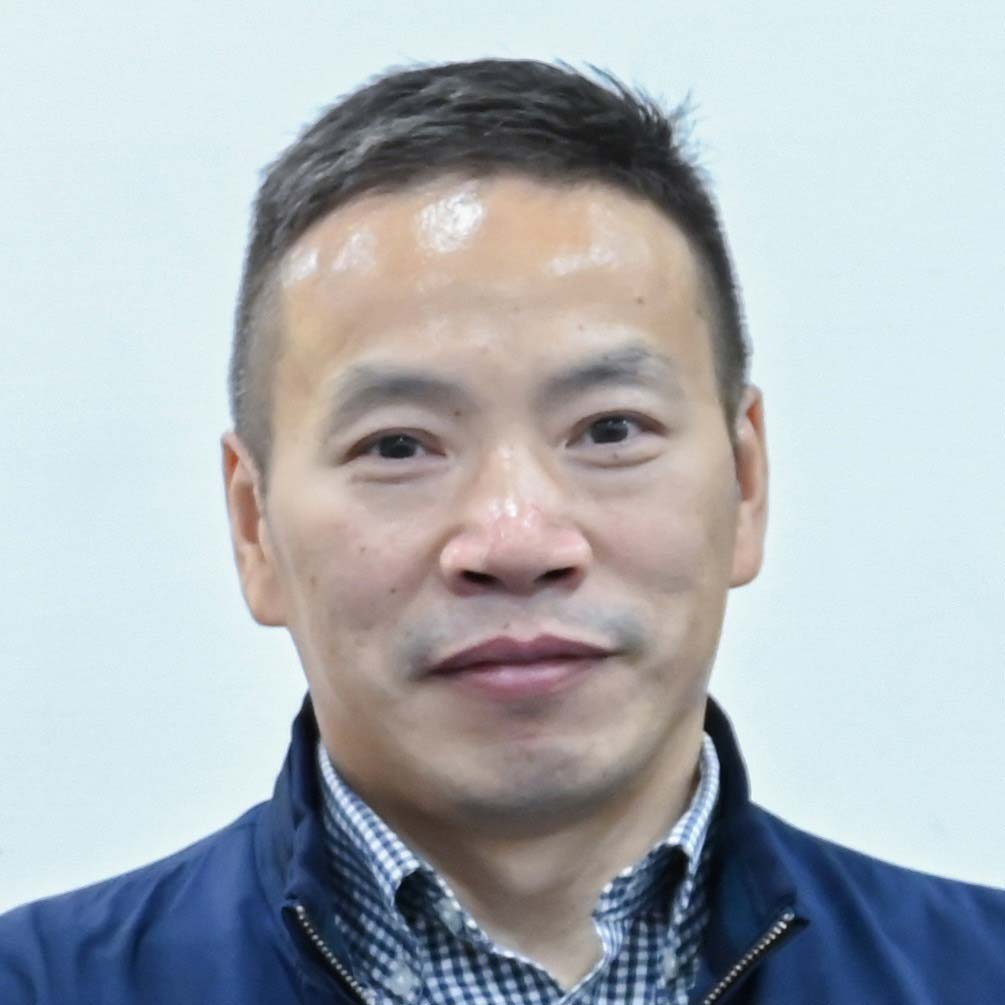
Invited Talk 2: April 20, 3:45 pm - 4:45 pm
Title: Exploring the Role of AI in the Evaluation of Data Visualisations
Abstract: The evaluation of data visualisations has traditionally relied on controlled experiments, performance metrics, and qualitative user studies to understand how people interpret and reason with visual representations. With recent advances in artificial intelligence (AI), there is growing interest in how AI can support, augment, and partially automate aspects of this evaluation process. This talk briefly reviews emerging developments in the literature and presents a recent case study on graph drawing quality evaluation, where AI is used to support the assessment of visual properties and their impact on readability. The talk also explores the potential and current limitations of AI in this space, and discusses possible directions for integrating AI into evaluation workflows in a practical and human-centred manner.
Bio: Dr. Tony Huang is an Associate Professor from the University of Technology Sydney, Australia. He received his PhD in computer science from the University of Sydney. His main research interests are in Human-Computer/Data Interaction and Visual Perception. He has over 150 publications in these areas. He has served as conference chair, program committee chair, and organization chair for international events. He is the former Associate Editor-in-Chief of the Journal of Visual Languages and Computing, an Associate Editor for Behaviour and Information Technology, and a Chair of the IEEE SMC’s award winning Technical Committee on Visual Analytics and Communication. He has also guest-edited a number of SCI-indexed journals.